Southeastern Ohio has been disproportionately affected by substance use disorders, such as opioid use disorder for decades. The Appalachian region of Ohio, once booming with industrial labor, saw a proliferation of opioid prescriptions following the loss of industry during the end of the 20th century, according to the National Library of Medicine.
Organizations like Athens HOPE acknowledge the presence of opioids in the area, as well as lead conversations surrounding communal efforts to provide education and support for Athens residents who are struggling with substance use.
In 1996, the Food and Drug Administration approved Purdue Pharma LP’s drug OxyContin for use. By 2001, the drug was the most frequently prescribed opioid in the United States for treating moderate to severe pain, according to the American Journal of Public Health.
Pill mills became prevalent in the Appalachian Ohio region, providing an uptick in the presence of opioids. Pill mills are clinics operated by physicians that pretend to be pain management centers, according to the National Library of Medicine.
Pill mills contributed to the longstanding struggle with substance use disorder, and helped bring Ohio to become the state with the second highest overdose mortality rate in 2017, according to the National Library of Medicine.
According to the Cleveland Clinic, SUD is a pattern of substance use which affects both one's health and well-being. It has been recognized by the American Medical Association as a chronic, relapsing disease since 1987.
Berkeley Franz, an Ohio University professor of community-based health, discussed the unique aspects of the opioid pandemic in Appalachian Ohio.
“This area was heavily affected by opioid prescribing … that's what really contributed to the opioid epidemic here,” Franz said. “Which kind of makes it unique in many ways from opioid overdoses in other settings, that it largely came from legal opioids that were prescribed and then either diverted or misused by patients.”
In 2017, amid the growing SUD crisis, OU’s College of Health Sciences and Professions teamed up with the Athens City County Health Department and OhioHealth to create Athens HOPE for the purpose of establishing prevention and education on substance abuse issues.
Rebecca Robison-Miller is the executive director of community relations and engagement for the OU College of Health Sciences and Professions as well as the co-chair of Athens HOPE, alongside Athens Job and Family Services Prison Reentry Coordinator Shawn Stover.
As an advocacy-based coalition, Athens HOPE does not provide direct services; however, it encourages groups and individuals to connect with each other, share resources and commit to reducing stigma surrounding SUD.
Stover discussed how Athens HOPE helps facilitate awareness and education within the community.
“What we see in this area is people get to such an extreme point before we see them, or before the professionals see them,” Stover said. “That's why Athens HOPE tries to intervene, maybe at a midpoint, or maybe we can catch a family member or a friend who can intervene and give them good contact information.”
Athens HOPE focuses on recovery-friendly workplaces, workforce development, stigma reduction, prevalence and knowledge of the location of life-saving resources, community engagement and more, according to its current strategic plan.
Athens HOPE is partnered with various groups, such as Athens City Schools, Appalachian Behavioral Healthcare, OU Heritage College of Osteopathic Medicine, Rural Action and more.
“Our community has made significant progress over the last nine years around substance use disorder treatment and recovery support,” Robison-Miller said.
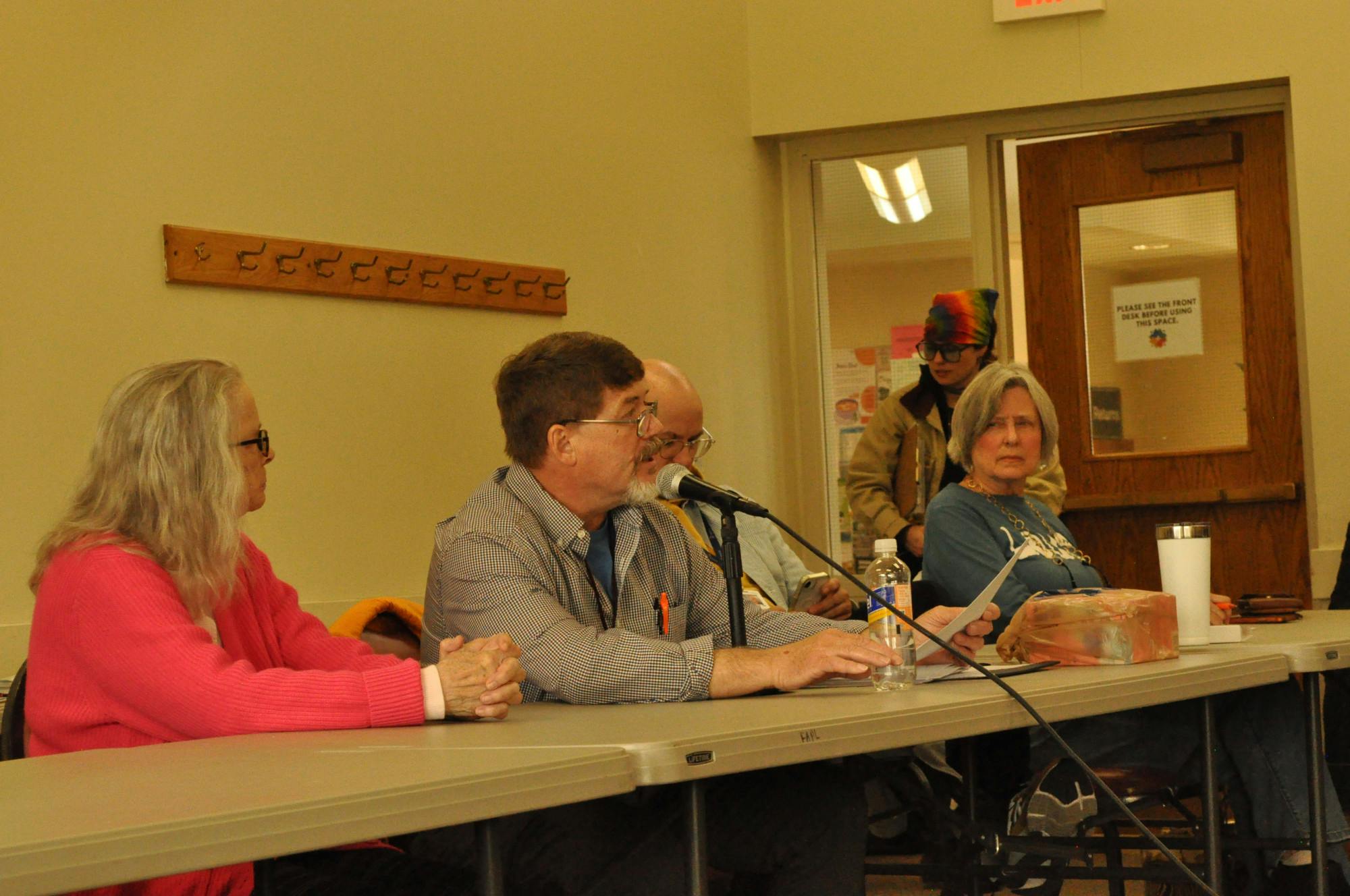
Athens HOPE hosts meetings every other month that often bring together all kinds of community members, from treatment providers to law enforcement.
Over the course of its nine year existence, membership has grown from a small group of six or seven advocates to now over 200 members, with about 40 attendees at each scheduled meeting across platforms.
“I love our membership,“ Stover said. "I love our people. I just think, I mean, I always look forward to our meetings and our gatherings … we have all such common interests and common drive, and you wouldn't belong to a group like this if you didn't.”
For communities, having a group with a diverse range of stakeholders can merge residents and “typical” decision makers, such as elected officials, to fully represent the community and engage with its residents, according to the Pennsylvania State University College of Health and Human Development.
At coalition meetings, organizations can discuss what they are working on in terms of SUD, and provide updates, while smaller group discussions provide a time to talk about priorities.
In the initial planning of Athens HOPE, there were discussions of incorporating substance abuse prevention education for children. In 2017, however, Ohio Revised Code’s House Bill 49 established the requirement of SUD education implementation in schools throughout the state.
Robison-Miller said Athens HOPE wanted to ensure there was no duplication of services, and because the state already mandated education in schools, it had to pivot.
Athens HOPE decided to take a lifespan approach to its advocacy work, where it focuses on providing connections and resources to anybody who might require them, rather than recreating existing services.
Despite the dedication of its co-chairs, a coalition-based nonprofit can be financially limiting. Even with it being part of both their jobs’ responsibilities, Robison-Miller has concerns about the long-term sustainability of Athens HOPE.
“It's a collective, very much grassroots coalition,” Robison-Miller said. “We are technically a nonprofit as well … but, I think, from a sustainability standpoint, and fortunately, we haven't needed a lot of money. We sponsor the community day of hope, and we usually have enough money to pay for the food vendors and some other things like that. We don't have a large budget, but we've also tried to be very responsible in terms of our asks for money.”
However, financial limitations do not stop Athens HOPE from running, the passion its members have for the mission has been a driving force in its success within the community.
“Without the passion behind the purpose, you're not gonna be able to go very far,” Stover said. “So to me, that has been something that's really worked and has been the cohesive factor for Athens HOPE.”
Nancy Roth, a community member of Athens HOPE joined the coalition following her son’s experience with substance abuse.
“I’m really glad that I joined Athens HOPE because a lot of that was the stigma reduction,” Nancy Roth said. “Because for years we were so isolated, really isolated, and I didn’t have anybody to talk to about it.”
Nancy Roth's son, Joe Roth was diagnosed with juvenile rheumatoid arthritis when he was 3 years old. The illness can cause persistent joint pain, swelling and stiffness, according to the Mayo Clinic.
When Joe Roth was 15 years old, following the death of his father, a doctor in Columbus prescribed him a large amount of OxyContin for his arthritis. Unaware of the growing dangers the drug posed, his mother agreed to what she thought would be a quality of life-saving measure.
After receiving the prescription for OxyContin, Joe Roth started using heroin.
Nancy Roth discovered Joe Roth’s addiction while he was still in high school, and receiving little to no support from family, had to navigate the world of SUD practically alone until she was introduced to Athens HOPE through another community member.
“Joey was, there was some legal stuff going on and the woman that he was dealing with in the Sheriff’s Office was a part of Athens HOPE … she gave me the name of the person, they were just getting started then, so I got a hold of this person and said ‘I’m interested in being a community member, part of it’ and she invited me to the first meeting and I’ve just been there ever since.”
Nancy Roth said she is really glad she found Athens HOPE. She said she felt isolated before joining. It also helped her navigate the stigmas surrounding abuse.
“Joey said to me more than once, ‘Mom, I’m not getting high, I’m just trying not to get sick,’” Nancy Roth said. “People don’t understand that, they still think they’re doing it for a kick.”
Joe Roth died in 2021 due to a xylazine overdose. Xylazine is a powerful veterinary tranquilizer commonly mixed in with opioids, according to the National Institute of Health.
Joe Roth was administered Narcan at the time of the overdose, however due to being unaware of the xylazine additive in the drugs he had taken, the Narcan was ineffective.
Nancy Roth has since made it her mission to shed light on the realities those struggling with SUD face.
“My mission is to be open about this,” Nancy Roth said. “To help with the stigma, to do what I can with Athens HOPE. We do community things where I sit at the table and give them information and talk to them if they want to talk to me about the hell that this is.”
Nancy Roth had an idea for Athens HOPE to hold a panel for parents who had lost a child to SUD, providing them with a chance to share their stories.
“The group itself was so attentive and so kind and sympathetic,” Nancy Roth said. “And so it was, that's why I felt blessed when I walked out. I'm really glad I did it.”
By taking a community-led approach to its prevention and outreach, Athens HOPE is able to provide the opportunities for connection and support its community needs. By prioritizing coalition-building and trust between organizations and institutions within Athens, Athens HOPE is addressing SUD and its impacts proactively by sharing resources to residents who need them.
Nancy Roth expressed what the community impact would be if a coalition like Athens HOPE did not exist.
“The agencies would all just be off doing their own thing,” Nancy Roth said. “Some of them might connect together, but they'd just be off doing their own thing … this is something that is really a problem. I mean, not just here, but it's a problem here. So I think the community would lose out enormously.”
According to Robison-Miller, Athens HOPE is open to everyone, and anyone who is interested in joining can do so. Robison-Miller said everyone is welcome to attend meetings or simply be on the organization’s e-mail list.
“Our members are our arms,” Stover said. “We are like the hub, and they are the spokes.”
as660621@ohio.edu