Jonah Daw, a sophomore studying outdoor recreation and education at Ohio University, is a counselor on staff at the same camp where he once dreaded journal time. During Daw’s time as a camper at Rising Appalachia’s Warriors camp, he learned to enjoy writing while listening to the birds in nature.
Every afternoon, counselors sent kids out alone, into the field, under a tree or by the pond, with a handmade paper journal with the instructions to sit and observe their surroundings.
“I remember doing this as a camper and … I was like this sucks, I want to be up and I want to be playing,” Daw said.
Daw kept returning to camp, and as the years passed, he said the 10 minutes of stillness began to feel different.
“I'm sitting here, I can hear the crickets, I can hear the birds, I can hear the trees and the breeze,” Daw said. “It’s very grounding.”
Daw, now 19, is one of roughly 200 young adults and children served each year by Rising Appalachia, a Millfield-based nonprofit that uses outdoor recreation, conservation and place-based education to connect Southeast Ohio youth to the land around them, and to themselves.
The federal government designates areas with too few mental health providers as Health Professional Shortage Areas, and as of 2026, Ohio had 138 such regions. Only 33.73% of the state’s mental health needs are being met, according to the Health Resources and Services Administration. Rural communities feel the absence of mental health resources most acutely. Of the 15 Ohio counties with the highest suicide rates, 14 are rural, including nine in Appalachian regions, according to the Ohio Department of Health.
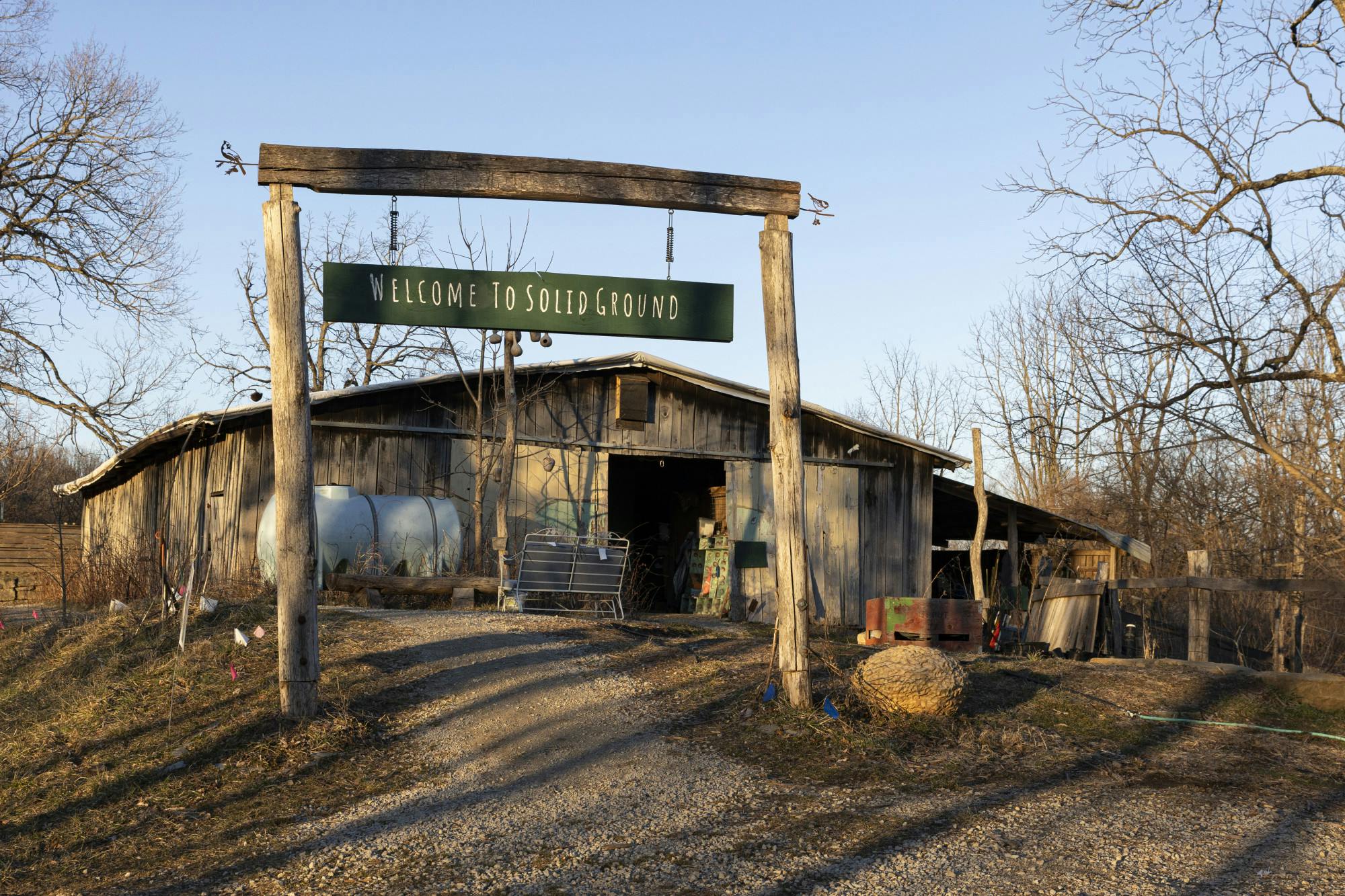
Rising Appalachia was founded in 2012 with a simple but intended mission, to use the land of Southeast Ohio as a classroom. Through nine weeks of summer camp, ecological apprenticeships and community programming, the organization teaches children ages 6 to 18. Here they learn survival skills, environmental education and Appalachian cultural traditions, including medicine making, edible plant identification and earth skills.
For program director Rina Caldwell, the outdoor setting is not secondary to the mission, but is the mission itself.
"Being in nature, being immersed, being outside, being physically active, being in community with other children and adults lends itself to a heightened mental state," Caldwell said. "As human beings, we need all of the things that we offer here at camp in order to thrive and to have a healthy mind and body."
Caldwell, who has directed the camp for four years, said the transformation she sees in kids is hard to summarize but impossible to miss.
"I see them coming away from the situation with a deepened sense of self and belonging, and also compassion and understanding about the world around them," Caldwell said.
The transformation shows up in the numbers too. When the camp began in 2012, it served roughly a dozen children. Today, all 316 spots fill within days of registration opening. Last summer, 30 teenagers voluntarily returned weekly as counselors-in-training, working completely for free.
“Just the interest of the teenagers wanting to be a part and take ownership over the CIT program shows me that what we're doing is meaningful," Caldwell said.
Daw is one of those teenagers. He was raised in Albany, a rural community in Athens County, where mental health, he said, was rarely discussed. Going to camp gave him something he didn’t have at home: people, a purpose and a reason to be outside.
"I think having that outlet to be with people and other kids during the summer and have something to do is really important," Daw said. "I think it's really important for people to have that."
When camp shut down during the COVID-19 pandemic, Daw noticed its absence impacting him. He started sleeping outside every night, setting up a hammock in his backyard to feel the same grounding the woods at RAW camp had always given him.
"I would get headaches, my eyes would hurt, I wouldn't sleep well," Daw said. "I realized this is because I don’t have an outlet to go and do something."
Research on Appalachian communities suggests connection to place is central to well-being. Rachel Terman, an associate professor of sociology at Ohio University who studies Appalachian identity and sense of place, said Appalachian people consistently cite connection as a meaningful and positive source of experience in their lives, even in the face of significant challenges.
"I think experiences that foster that kind of connection to place would be beneficial in the face of challenges," Terman said. "I've seen that anecdotally in my own research, and I think that's represented in an overall common understanding in the discipline of Appalachian studies."
Terman also noted that young people in rural places often receive conflicting messages about where they're from. They are told by teachers, institutions and sometimes families that opportunity requires leaving, while simultaneously being encouraged to stay home.
"There are lots of conflicting messages that young people get about place, especially, I’m more familiar with the research on rural places, and those kinds of conflicting messages that are there," Terman said.
Terman said programs like Rising Appalachia work in part because of the consciousness of the adults leading them, who recognize the connection between place and identity as something worth fostering in young people.
Caldwell said Rising Appalachia’s program’s biggest constraint is time, as a week of summer camp, however transformative, has limits.
"We only have a limited time with these kids, and we can't be there all the time for them as much as we would like to," Caldwell said.
Terman echoed that point from the outside. She said a program rooted in place and community cannot substitute for clinical mental health support.
"It wouldn't replace specific treatment plans or any kind of clinical approach in terms of the psychological or counseling side of mental health," Terman said.
Expanding Rising Appalachia’s reach would require funding for year-round programming and permanent facilities, neither of which the organization currently has.
"We have limited resources and we have limited funding, so there's really just only so much we can do with the space that we have and the funding that we have,” Caldwell said. “We try to keep our camps affordable for all, and we offer scholarships to anyone who requests them."
For Daw, the question of what Rising Appalachia can or can't fix is subordinate to what he gained from attending camp. He watches younger campers now the way his counselors once watched him, as shy kids clinging to the one friend they came with, slowly opening up by the end of the week.
"It’s really neat that you can see them transform into more of, I'm not scared of bugs anymore, I'm not scared of mud, I'm willing to try new things,” Daw said. “We like to push them out of their comfort zone."
Daw grew up here and plans to stay.
"I think Appalachia is great," Daw said, "As long as you're not lonely, if you can find people to be with.”