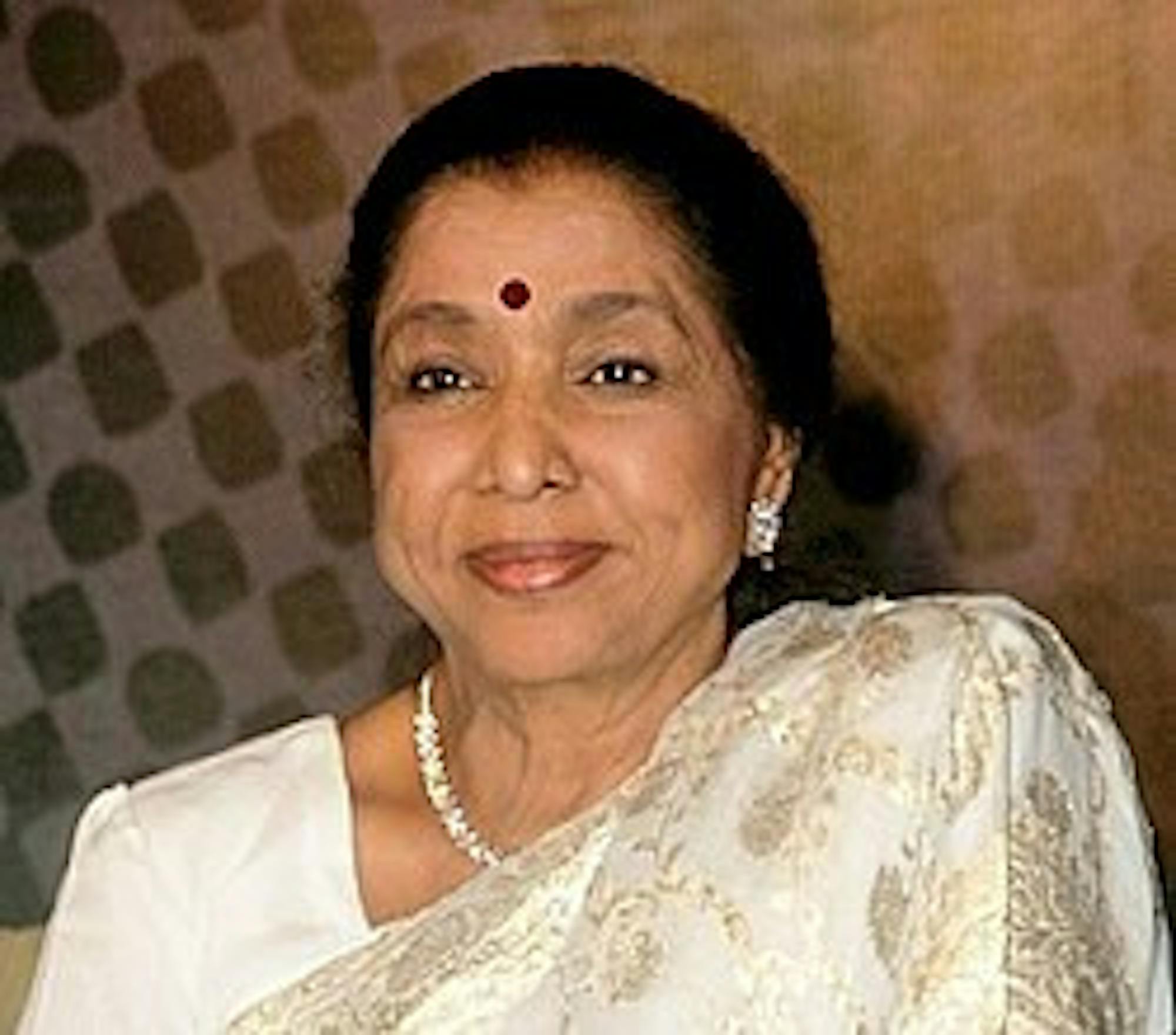
For more than eight decades, the voice of Asha Bhosle was not only the soundtrack of Bollywood but one of the defining sounds of Indian cinema. A cultural phenomenon, Bhosle captivated audiences with a voice that could move effortlessly between romance, drama and thriller. Known for her work across countless Bollywood films, she built a career that spanned generations, becoming one of the most enduring and recognizable voices in music.
Bhosle died on Sunday, April 12, in Mumbai, India, at the age of 92. Her son, Anand Bholse, confirmed her passing, and medical officials later reported she died from cardiac arrest at Breach Candy Hospital. She was later laid to rest the following Monday, in a traditional cremation ceremony.
Bhosle was known as a playback singer. Playback singers are vocalists who create music that actors and actresses will later perform in a film. This is particularly done in Indian films. In a film industry that is built on music and storytelling, playback singers are often the emotional core of a movie. Bhosle’s voice became one of the most powerful tools not only in the field but in this industry.
Her career was as expansive as it was influential. According to BBC reports, Bhosle recorded more than 12,000 songs, a number that reflects not only her longevity but also her ability to evolve. From classical compositions to bold, modern sounds, she continuously adapted to the changing Bollywood music without losing what made her distinct. Her work spanned across decades of film, contributing to projects such as “Mai,” “Lagaan: Once Upon a Time in India,” “Ghar Ka Sukh” and “Raj Mahal.”
Beyond film, Bhosle’s influence extended into independent music and global collaborations, further solidifying her versatility. She experimented with pop and international styles, working with artists and composers outside of traditional Bollywood circles. This willingness to explore different sounds helped introduce her to audiences beyond India, expanding her reach and enforcing her status as a global music icon.
Music was also a family legacy. Her late sister, Lata Mangeshkar, was equally celebrated as the two created an era in Indian cinema. While comparisons followed them throughout their careers, Bhosle carved out her own identity marked with visibility and a willingness to create risks.
Born in 1933 in Sangli, India, Bhosle was one of five children who grew up in a musical household. Her father was also a well-known actor and vocalist who introduced her to performing at a very young age. Growing up, the ability to range became her signature. At a time when many artists were closely tied to a singular style, Bhosle moved across genres with ease. This helped push Bollywood music into new spaces. Her voice could be playful, haunted, bold or soft, often within the same era. This gave composers and filmmakers a level of flexibility only a few singers could reach.
Her influence even paved the way for future playback singers, particularly women in an industry that favored established voices. By continuously reinventing herself, Bhosle demonstrated that longevity in music required both adaptability and individuality. Her collaborations with contemporary artists like Gorilliaz and Michael Stipe, lead singer of the band R.E.M, prove her ability to take in many unconventional songs and styles.
Even as decades passed, Bhosle remained constant. Her songs continued to reach new audiences, bridging generation gaps and reinforcing her place not only as a performer but as a lasting influence on the industry itself.
For many, her voice holds memories of films watched with family, moments of joy and the evolution of Bollywood as both an art form and global cultural source. With her passing, Indian cinema loses more than just a singer, but it officially marks the end of an era. Not only was the loss of Asha Bhosle the loss of a talented musician, but it was also the loss of a voice that helped shape the identity of the Indian film scene.