

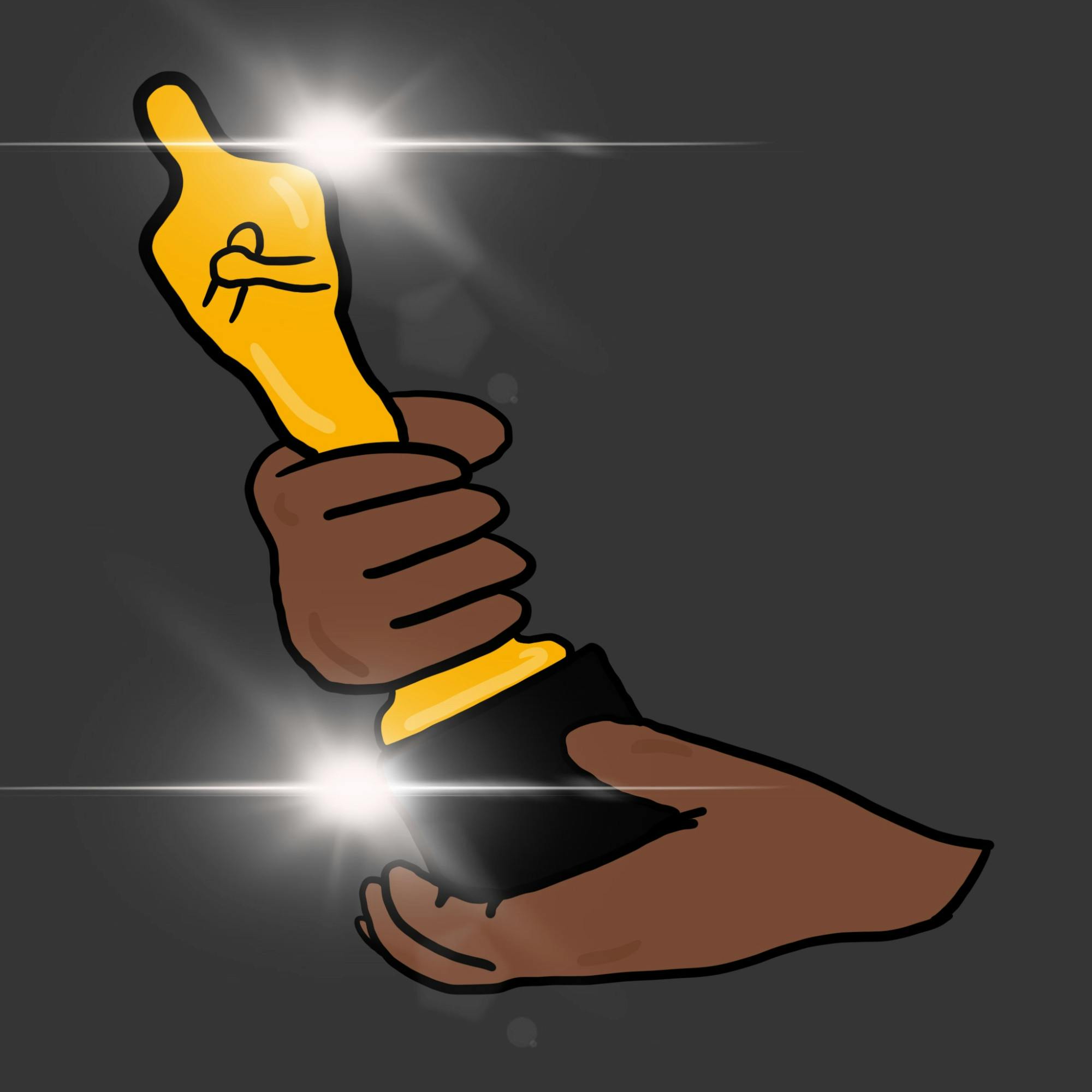
At the 98th Academy Awards, Michael B. Jordan won best actor for his roles as both “Stack” and “Smoke” in the critically acclaimed film “Sinners,” directed by Ryan Coogler. The film received 16 nominations, including best original screenplay and best cinematography.
For many viewers, to see a film centered on Black culture, Black history, Black music, racism and cultural appropriation recognized on a stage that historically hasn’t paid everyone their due flowers was impactful. Jordan's win is a poignant one, but it reminds everyone of the importance of diverse recognition in the entertainment industry and how it remains a relevant issue to this day.
There is a complicated history with industry organizations and Black creatives; to understand it one must look back to gain context.
Despite the Academy Awards being held for nearly a century, according to inclusionlist.org, only 2% of all nominees and 2% of all winners from 1929 to 2026 at the Oscars were Black.
In 1940, Hattie McDaniel became the first Black actress to win an Oscar for “Gone With the Wind,” as the character “Mammy,” a powerful victory and symbol of Black resilience in the industry. Despite this, McDaniel was forced to sit at a segregated table away from her cast members at the event. This symbolized how even in moments of success; Black creatives still deal with the effects of racism in the industry and have for far too long.
Sidney Poitier won “Best Actor” for "Lilies of the Field” in 1964, becoming the first Black actor to win the category. Poitier’s win paved the way for future “Best Actor” winners, including the likes of Denzel Washington, Forest Whitaker, Jamie Foxx and later Jordan.
Although representation increased in the following decades after Poitier’s win, the fight for diverse recognition in film continues. In the 2010s, the Academy notably faced backlash for its continued lack of diversity.
On Jan. 15, 2015, Twitter activist April Reign tweeted “#OscarsSoWhite they asked to touch my hair,” sparking a viral reaction. This was in response to 20 acting nominations being given to white actors. The #OscarsSoWhite Movement addressed the very present lack of diversity in Oscar nominations.
In 2016, the Academy presented their acting nominations for the upcoming awards of consistently white actors. This prompted celebrities such as Spike Lee and Jada Pinkett Smith to boycott the Oscars, because of their lack of diversity. The #OscarsSoWhite Movement shows that diverse recognition is not an issue of the past, but a continuing and relevant issue in the 21st century.
Similarly, the Recording Academy has long had accusations of racial bias with its nominations. In 1989, Will Smith and DJ Jazzy Jeff won “Best Rap Performance,” but decided to skip the Grammys ceremony after finding out it wouldn’t be televised, demanding that rap gain the respect that it deserved.
The 2010s featured some controversial wins, such as in 2013, Macklemore won best rap album for "The Heist” over Kendrick Lamar’s “Good Kid, m.A.A.d City.” Similarly, Adele won “Album of the Year” for her album “25” over Beyoncé's “Lemonade,” which caused significant controversy, especially noting the cultural success of “Lemonade.”
These were widely considered snubs and represent a continued conversation on the role of award shows when it comes to properly recognizing cultural impact.
In the 2010s, artist Frank Ocean boycotted the Grammys because he felt the award show didn’t properly recognize Black artists, much like the boycotters of 1989.
The 2020s have seen some notable Grammy wins, including Lamar winning “Record of the Year” for “Not Like Us” and Beyoncé winning “Best Country Album” for “Cowboy Carter” in 2025. While there have been significant victories in the entertainment industry, it’s also true that there remains work to be done when it comes to recognition in the film and music industry.
Despite recent victories, organizations in the entertainment industry still have a necessary responsibility to acknowledge contributions and the cultural impact of artists of all backgrounds and of all cultures.
David Asamoah is a freshman studying journalism at Ohio University. Please note the opinions expressed in this column do not represent those of The Post. Want to talk to David about his column? Email him at da602024@ohio.edu.


