

As temperatures drop and snow falls, wildlife in Athens County moves for the winter. Birds fly south, some mammals turn in for a nap and many reptiles and amphibians burrow underground.
Ryan Donnelly, a state wildlife officer in Athens with the Ohio Department of Natural Resources, said there are no long-term hibernators in Athens County.
“Black bears is the (hibernator) that comes to mind,” Donnelly said. “We have a couple around, but typically people don't even really see those to start with … I got a report of one in an adjacent county, over in Washington County, recently.”
Donnelly said black bears are light hibernators. According to the National Park Service, as bears go into dormancy over the winter months, their heart rate and metabolism slow. However, their body temperature does not drop, which is a requirement for true hibernation.
The midland painted turtle, a common species in Athens County, finds deep water where it can burrow into mud and debris at the bottom as cold weather sets in. On a warm winter day, however, the Ohio Division of Wildlife’s reptile field guide says people might spot one basking in the sun on a log.
Snakes, another cold-blooded reptile, go into a state called brumation, which is similar to hibernation. During brumation, their metabolism slows down, and they don’t eat anything. Instead, the NPS states they spend the cold months in a hibernaculum, where many snakes often brumate together.
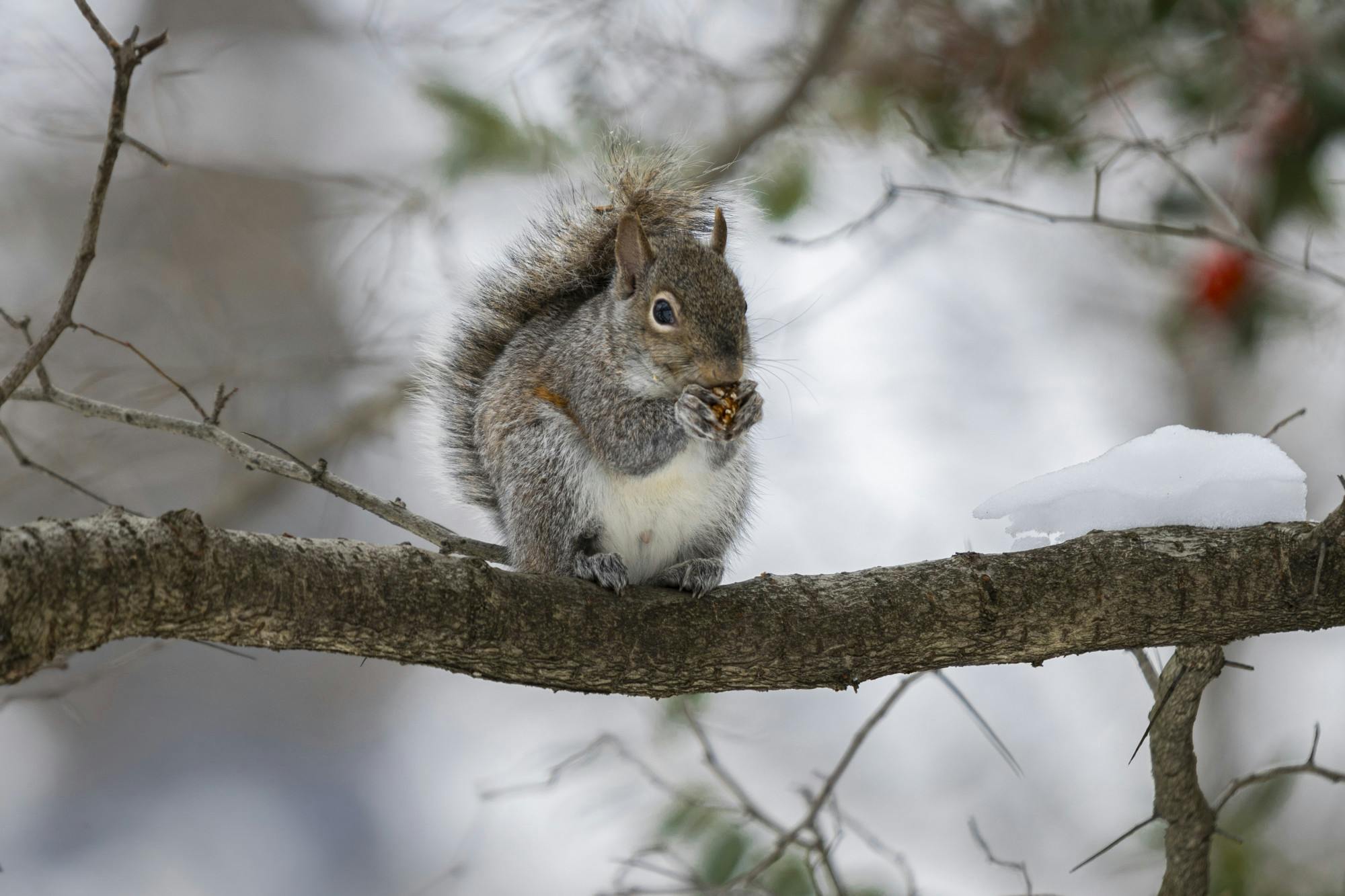
The NPS also states the true hibernators — with decreased metabolism, body temperature and heart rate — are rodents. After squirrels drop their body temperature, they can stay dormant for a few weeks before they need to wake up and warm up before returning to hibernation.
On campus, Donnelly said squirrels may get less skittish without students over winter break.
“There's still plenty of food for them to scavenge,” Donnelly said. “But they may get closer to buildings and things like that, where they typically wouldn't if there is a lot of activity.”
Another campus favorite species is the white-tailed deer.
One positive of colder temperatures for the deer is related to Epizootic Hemorrhagic Disease. EHD typically causes death within 72 hours after being transmitted by the midges that carry it, according to a previous report by The Post. Donnelly said these midges die after a couple “good frosts.”
While the deer are not getting sick, they are also most easily spotted. Hikers and hunters can both benefit from a large snow if they are willing to brave the cold.
“It's a lot easier to locate deer if there's snow on the ground if you're out in the woods,” Donnelly said. “Deer coats kind of blend in with the natural kind of brown, so then when you get a layer of snow out during the hunting season there, it makes them pop a little bit, and it makes (them) a little easier to identify and see with the eye.”
Deer are not the only animals that winter conditions make easier to spot.
Karen Mammone, a professor of instruction in the biological sciences department at Ohio University, considers herself an avid birder who enjoys observing and studying birds in their natural habitats.
“It is all I do in my spare time,” Mammone said.
Birding in winter has its advantages, one being the ease in spotting the birds.
“One reason they're a little easier to spot is because the leaves are off the trees,” Mammone said. “I see a lot more (individual) birds in the winter, even though there's more birds in the spring and summer, because they have leaves that cover the trees and a lot of them are hidden.”
Athens County is home to many colorful birds during the spring and summer.
“Thirty plus different kinds of warblers who are tiny little song birds, like very colorful and beautiful ... they’re not here now,” Melissa Wales, a member and former Southeast Ohio regional director of the Ohio Ornithological Society, said. “Your Orioles, your thrushes, your warblers, your vireos, they all are singing and around in the summer, but have gone back to their winter homes.”
Even though many of the colorful songbirds migrate south for the winter, snowfall can still increase the number of birds seen.
“If the fields are covered in snow and their natural food sources aren't as available, then you'll see a lot more coming into your feeders,” Wales said. “During a snowfall, you'll have a rush of cardinals and sparrows and finches and things coming to your feeder.”
Mammone said she suggests clearing your sidewalk and putting bird food down when it snows to really attract birds.
“I call them walkway parties,” she said.
The main species people see more of during the winter are all types of waterfowl. Ducks, swans and geese, among other species, come south to Athens County.
“The colder it gets farther north, the more ducks and geese get pushed down,” Donnelly said. “When things start to ice up … (they) look for open waters, so they keep coming south until they get that.”
Wales recommends going to Lake Snowden to look for these ducks that come down to Athens County in the winter.
“When I see temperatures drop and ice is going to be forming, all I can think is, ‘Ducks are coming,’” Mammone said.
Whether it is lying dormant or flying around seeking open water, there is plenty of wildlife to see in Athens County during the colder months.
“It's always exciting seeing a bobcat,” Donnelly said. “They are very, very elusive, they're pretty smart creatures, and when I do see one out, that's pretty cool.”


