

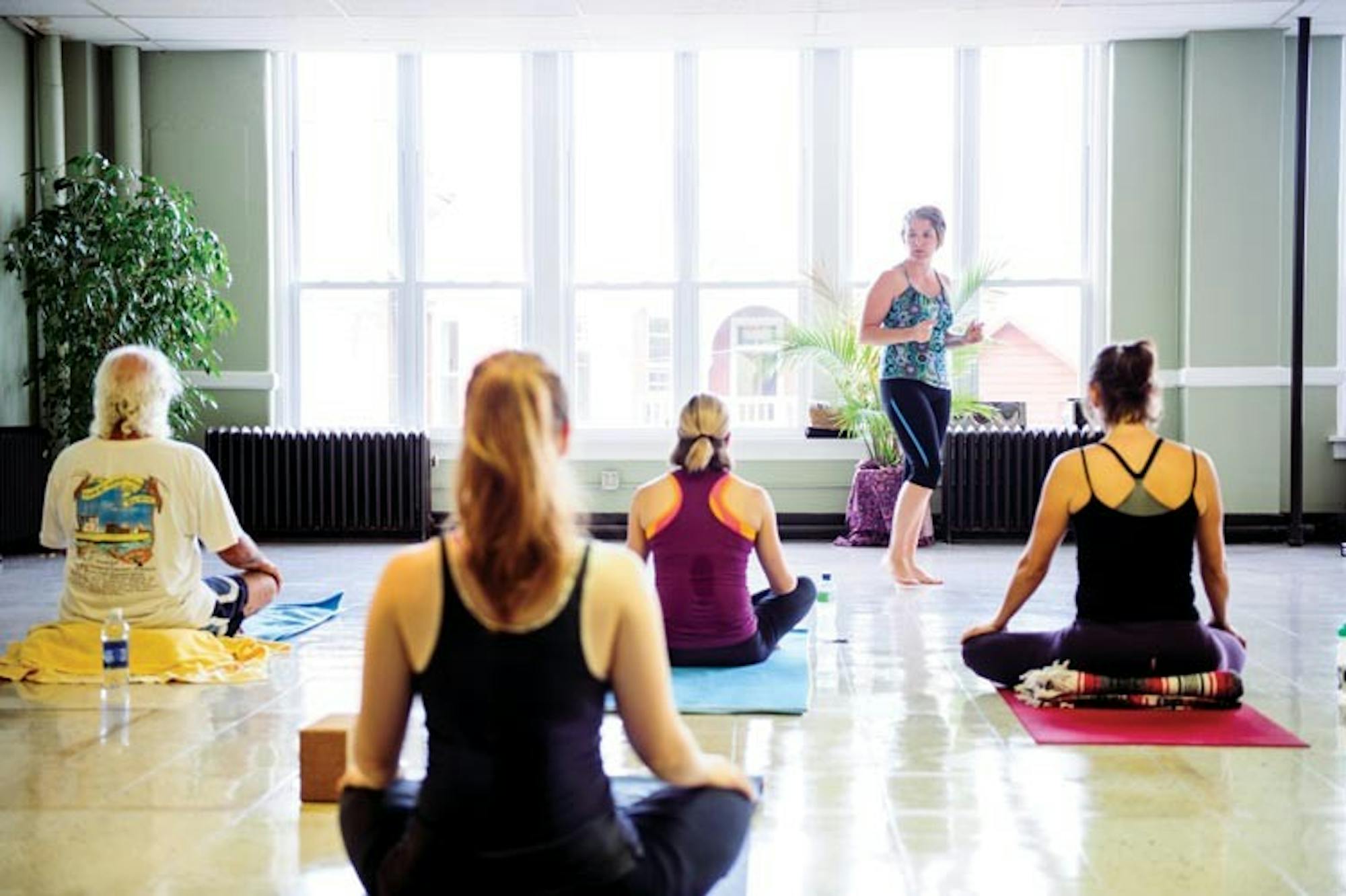
Seeking peace and inner wisdom, Kristen Wade turned to yoga when she was about 12 or 13 years old.
Wade, now an instructor at Inhale Yoga Studio, has been studying yoga and spirituality for 20 years and found her passion in Anusara yoga, a Hatha practice with a Tantric philosophy.
Hatha, one of the most popular and well-known styles of yoga in the West, is a slow-paced, gentle practice that focuses on the flow of movement. Like Anusara, many styles of the ancient art have a strong basis in Hatha.
“Anusara has a strong alignment focus, and that’s what separates it from other forms of yoga,” Wade said. “The Tantric philosophy is based in a philosophy that all things are inherently good, and the alignment creates awareness of oneself.”
But unlike Wade, many Western instructors tend to focus more on body and fitness rather than the philosophy, said Anurag Raghuvanshi, a master’s student studying electrical engineering, avionics. Raghuvanshi’s grandmother in India practices daily and discusses yoga methods with him regularly.
“Eastern yoga believes in unity of the body and mind, but finds that being at peace of mind is more important,” he said. “When you reach a spiritual height you can see the world in a very open way.”
Amy Apgar, a yoga instructor at Ping Recreation Center and a senior studying dance and communications studies, said that she teaches in an Americanized setting, focusing more on fitness, flexibility and relaxation.
“There is a lot more focus on meditation in Eastern yoga, which often gets overlooked in American classes,” Apgar said. “That aspect is difficult to achieve when looking at it from a workout perspective.”
Ping incorporates a healthy mix of yoga forms, said Stephanie Fisk, a group fitness instructor at Ping and a graduate student studying art history.
“Typically, you’ll have some at Vinyasa, or breath-focused yoga, at the beginning and then we’ll end more on a Hatha approach because it is a standard form,” Fisk said.
Fisk’s favorite yoga to teach is power yoga, which is based on Ashtanga yoga.
“The way we’ve westernized Ashtanga is by combining strength-training moves into the yoga practice,” Fisk said. “Instead of holding poses, you could incorporate Pilates moves or have sit-ups, and that wouldn’t be the oddest thing.”
Though yoga is an option for American students, many colleges in India actually set time aside for students to practice because the collegiate-level stress can be too much, Raghuvanshi explained.
“The pressure from professors is so much that people aren’t able to get accustomed to it,” he said. “They wanted to see how to relieve the stress, so now the government has said students should go regularly to yoga.”
Although the styles are different now, Raghuvanshi said that the perspective is changing.
“If you actually tell people about the spiritual aspect or explain how people can achieve peace, they’ll try to achieve it,” he said. “With gurus from India creating yoga centers in the United States and meditation yoga gaining popularity, I don’t think there will be much of a difference later on.”
ao007510@ohiou.edu


