

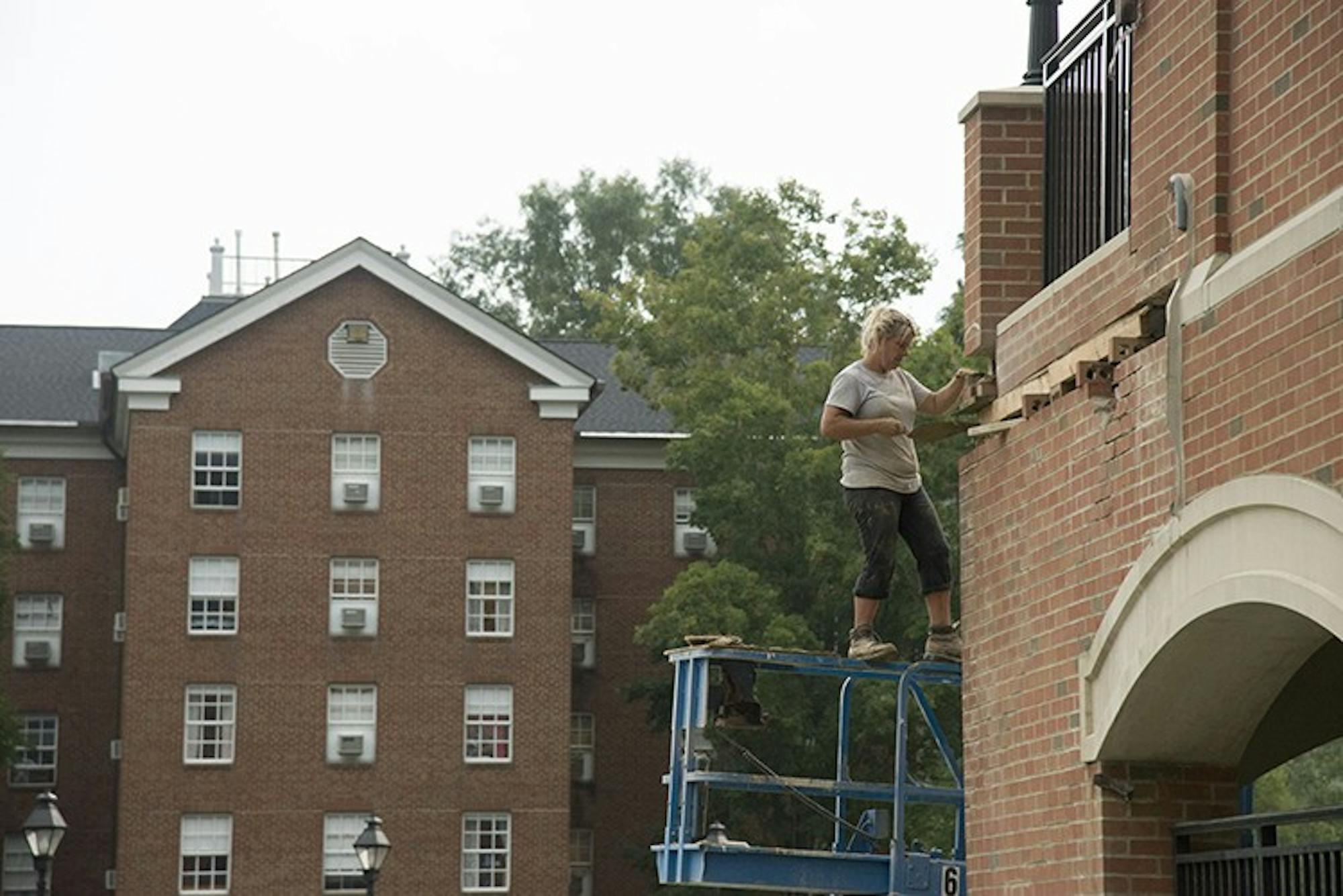
Ohio University, along with other state institutions, have put together a proposal with construction projects they’d like to see receive a portion of state funds.
The proposal will be forwarded to legislators for approval and hopefully introduced to the Ohio General Assembly in February. They will be voted on in the state’s biennial budget.
A commission titled the Higher Education Funding Commission 2.0, led by OU President Roderick McDavis, was tasked by Gov. John Kasich to put together a list of construction projects their campuses need the most.
“This is a good move moving forward,” Kasich said during a Thursday conference call with media. “We have to collaboratively communicate in order to be successful, and make higher education available accessible and affordable for students.”
The estimated $404 million budget proposal gears toward different incentives McDavis hopes would be focused on within the 2015-16 capital budget, which will also be introduced to the Ohio General Assembly in February.
Of the recommendations:
· 88 percent are for maintenance and repairs
· 4 percent are local community college campus funds
· 3.9 percent are related to technology improvements
· 2.2 percent are expansion projects
· 1.9 percent are for projects that are “student friendly,” including welcome centers and advising offices
“Deferred maintenance is a very serious issue for us in the state,” McDavis said.
OU alone is asking for about $24 million for construction projects, according to a previous Post article.
Before this change, colleges received state capital appropriations heavily reliant on a formula determined by the age of an institution, according to the educating commission’s recommendations.
This new approach allows institutions to collaborate on a single-list of capital projects that would benefit them all, according to the proposal.
“The commission has done a great job in its process,” said Tim Keen, director of the Ohio Office of Budget and Management. “I appreciate all the hard work put into this process ahead.”
McDavis said all the involved parties want to maintain and improve Ohio’s quality of higher education.
“We stand united with these recommendations as one higher education community,” McDavis said.
hy135010@ohiou.edu


