

Kickstarter helps make two OU projects come to life.
Whether it’s bringing back a beloved short-lived TV series, allowing an artist time in an expensive studio or even just making a potato salad, everyone and their brother seems to be utilizing Kickstarter to bring their passions and dreams to life.
Kickstarter made national headlines over the summer when a Columbus man, Zack Brown, exceeded his $10 goal of making potato salad with more than $55,000 in donations from 6,911 backers.
The crowd-funding website has become a popular tool to fuel artistic projects and dreams including LeVar Burton reviving the Reading Rainbow television series and Rob Thomas hosting a successful last chapter of Veronica Mars.
Ohio University is no different. Pearl Gluck, a former Film Division visiting assistant professor who recently received a tenure position at Penn State, was able to earn $18,240 in order to make her first feature-length narrative film, The Turn Out, a reality.
Kickstarter has always been a part of pre-production for Gluck’s film, centered on a trucker who tries to save the life of a girl who is being sex-trafficked at his local truck stop. Having successfully used the site to make her short film, Where is Joel Baum?, she saw this process not as part of a new age of filmmaking, but rather the next evolution of it.
“I have been seeking out money from friends to make movies since 1996, so this isn’t so much a new step but really just doing it digitally now,” Gluck said. “I have been crowdsourcing since the beginning, and that’s how I have always done it.”
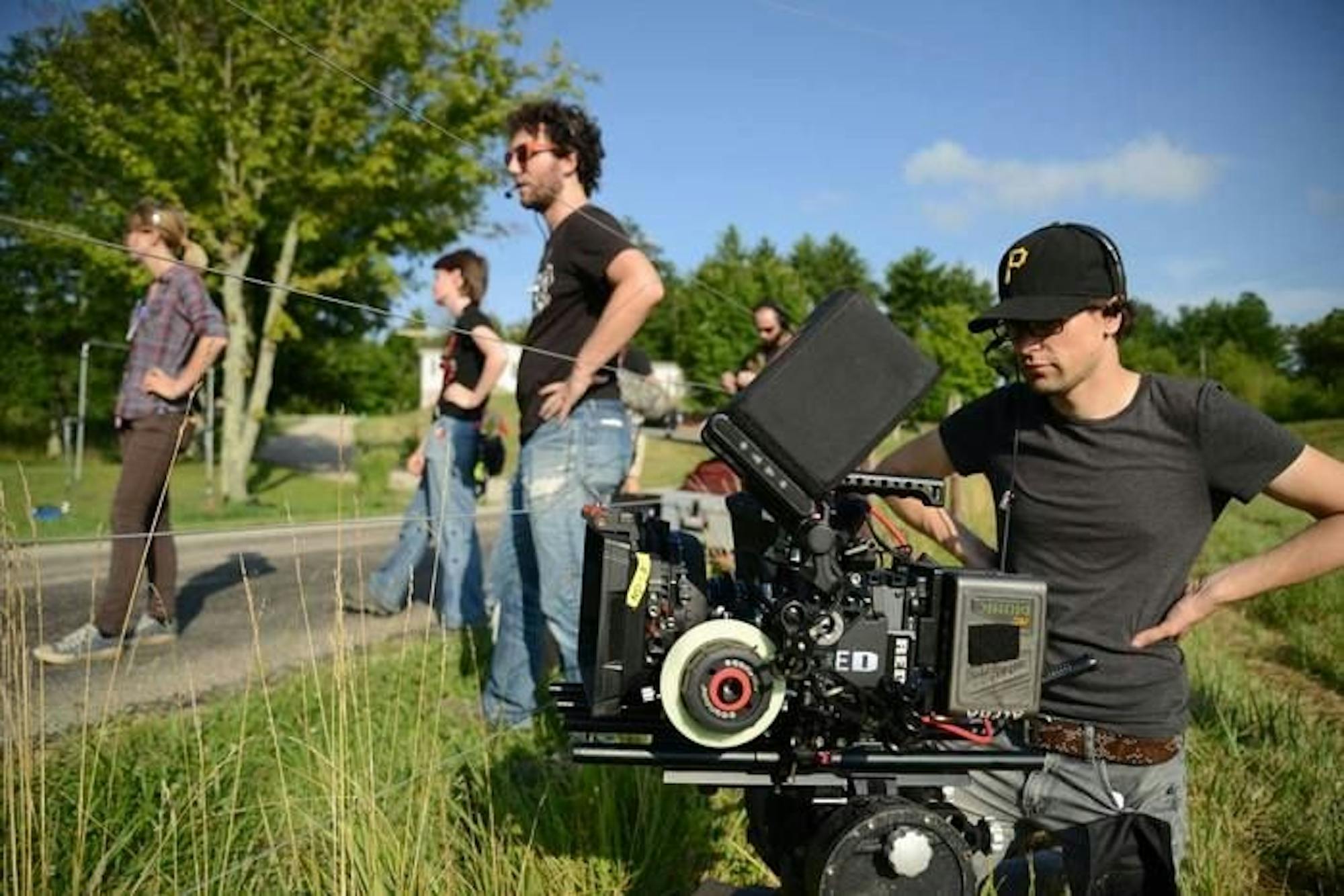
In addition to making her first movie, this was the first time she could use OU Film Division students on the project. Six students had the opportunity to work on this crowdfunded project.
“I learned a variety of technical and personal skills from working on the film, as well as made many new friends and potential contacts,” said Dylan Dyer, first year MFA student in the Film Division working second assistant camera. “You can learn something new on every set, and this one was no exception.”
Also learning from the experience was Gluck herself, who felt the intense filming environment of the movie made for a learning experience for everyone involved.
“Of course the process is different than working with them in class, because you are challenging them and yourself so hard to make the movie you want to make,” Gluck said. “It was an incredible experience, though, and what we were able to accomplish in just a short period of time is fairly remarkable.”
Amy Taylor, 2012 MFA School of Film graduate, is another individual who has used crowdfunding as a necessity when it came to transiting Taylor’s Jess Archer Versus from its short film origins to a new web series.
“Kickstarter was the only option,” said Liz Manashil, a producer on the web series and USC graduate. “I ran a successful Kickstarter campaign a few years ago for a feature and heard from several people I consulted that, for our purposes, Kickstarter was the crowd-funding option for us. Personal funds were not going to cover what we needed to rent/purchase and pay for to make this web series.”
After raising $15,246 to create the web series, Jess Archer Versus is in pre-production, with a first season planned and no direct end in sight. The leads from the original short, Emily Williams and Stefan Kumor, will be reprising their roles, but some additional supporting characters still need to be cast. The production is expected to begin in early November or December.
The season currently is eight episodes, with each episode roughly an hour long, involving Jess solving one mystery, similar to Veronica Mars.
Some high profile Kickstarter projects ultimately fizzled financially including Zach Braff’s Wish I Was Here, the Veronica Mars movie and Spike Lee’s Da Sweet Blood of Jesus.
But, current and former OU students seem to find success on a smaller scale thanks to fan support.
“A Kickstarter project already has started to build its audience before it has finished production,” Manashil said. “You can say the same for non-Kickstarted projects, but the people who put their time, energy and money in to make this series together — they become a part of the process in a very specific way. We have an active audience thanks to Kickstarter.”
@thewillofash
wa054010@ohio.edu


