

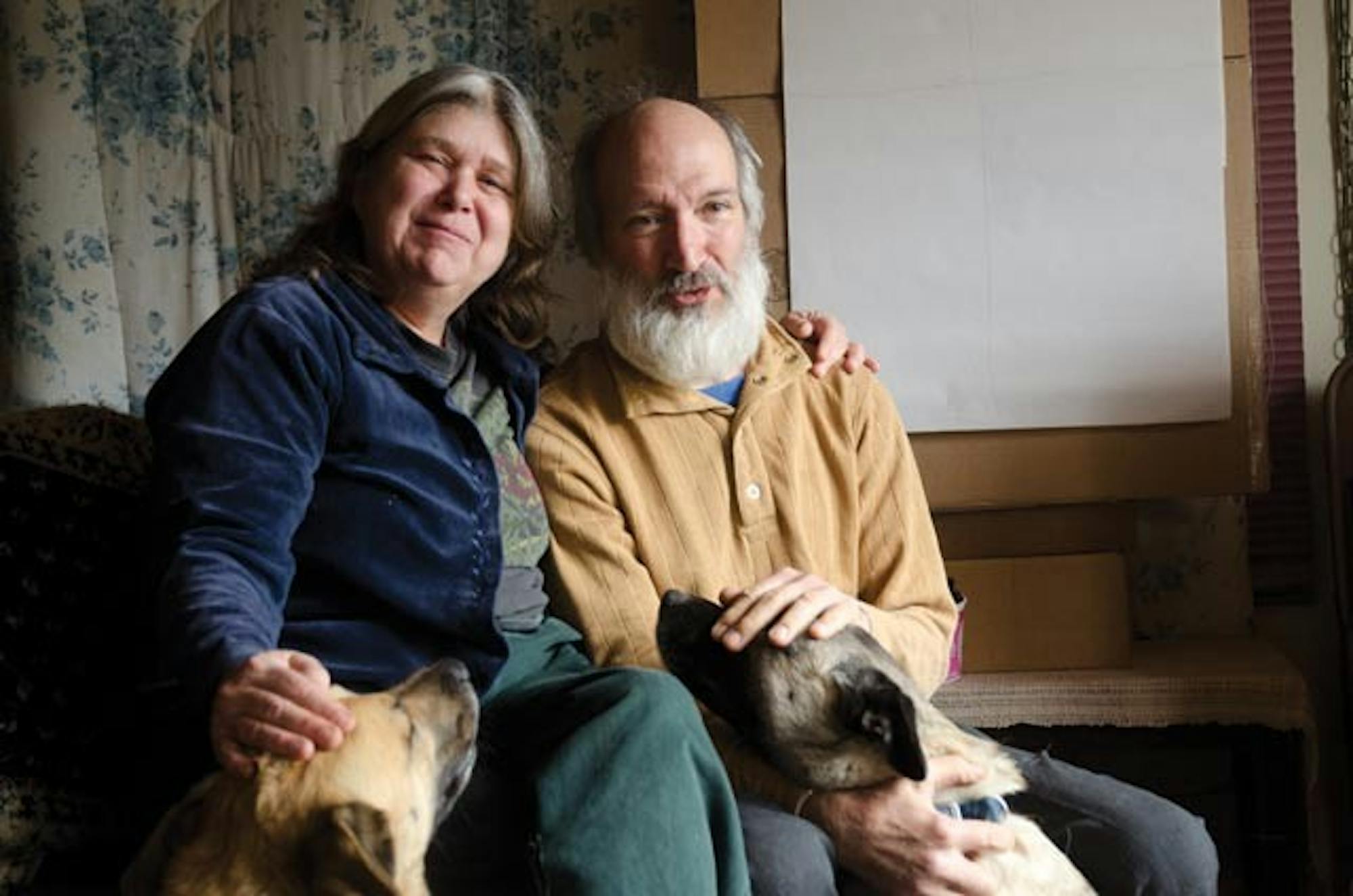
Despite the frigid temperatures and sporadic snowfalls of an Ohio winter, Athens farmers still get up every morning ready to tend the crops they grow.
“We can grow year-round here,” said Kathy Jacobson, RN steward of The Broadwell Hill Learning Center and Sustainable Stewardship Station. “It doesn’t just all go to sleep.”
The farming stereotype of men on tractors plowing the fields often causes misguided thoughts about what farming is, which contributes to the perception of an off-season, Jacobson said.
Jacobson’s farm primarily focuses on tree farming and vermiculture — the raising and breeding of earthworms — which are crops that can be sustained through the winter months.
Earthworms can be bred indoors or outdoors in bins and they can be useful in processing food scraps, which is more efficient than composting, said Constantine Faller, owner of Athens’ Own, which makes and sells local food products. Faller is one of the many local vendors at the Athens Farmers Market.
Along with maintaining crops through the winter, area farmers also turn their focus onto their livestock.
Lauren Genter of Ancient Roots in Athens, which also sells locally made products, and another Athens Farmers Market vendor, said her organization works with animals, such as chickens, and are able to make maple syrup over a fire outside to sell to the market during colder months.
“Also, (we are) making plans for the growing season and ordering seeds,” she said.
While farmers refer to spring and summer months as the growing season, locally grown and locally made products are always available to Athens residents.
“(Some) people think, if (the food) wasn’t locally in the ground, it wasn’t local,” Faller said, referring to the difference between locally grown and locally made products. “It’s important to really understand the answer.”
For example, coffee that is brewed in Athens but is made from beans from Mexico or Peru is a locally made product.
However, the farming industries available in Athens make locally grown products available.
Organizations such as Green Edge Gardens, a farm in Amesville, use greenhouses to grow year-round, said Becky Rondy, owner of Green Edge Gardens, in an email.
The industry as a whole is “a lot more than farming,” Faller said.
“(We) can’t just look at plants and what we do in the off-season and not think of keeping our soils healthy so we can plant again,” he said.
kf398711@ohiou.edu


