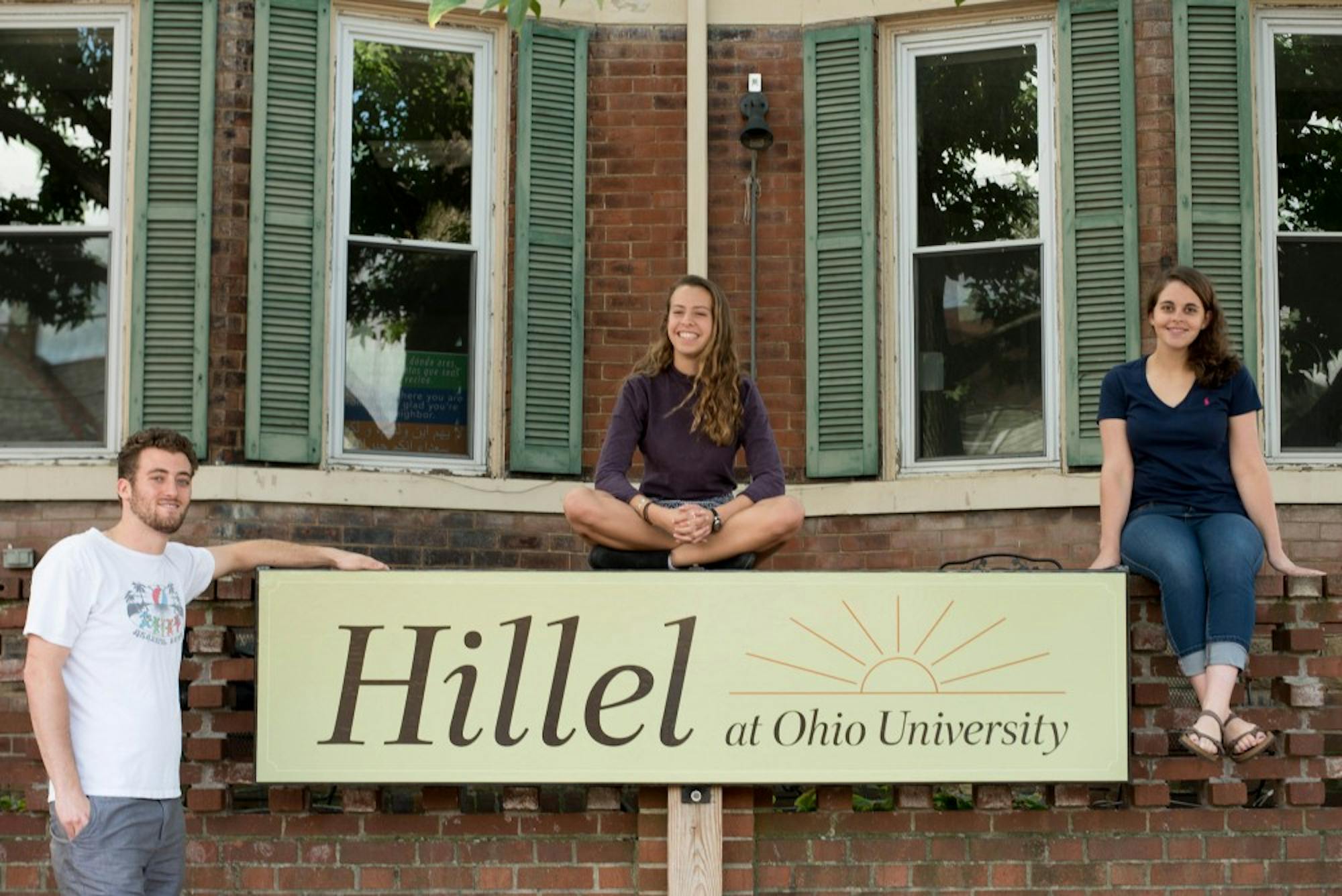
With having to balance school work and major religious holidays, such as Rosh Hashanah and Yom Kippur, Jewish students find fall to be a busy time.
Yom Kippur follows 10 days after Rosh Hashanah, the Jewish New Year. Yom Kippur is known as the Jewish day of atonement, in which Jewish people ask for forgiveness from God and memorialize lost loved ones. The days between Rosh Hashanah and Yom Kippur are called the Days of Awe, also known as the Days of Repentance, when Jewish people reflect on their actions from the last year and make amends with people they’ve hurt.
“Yom Kippur is probably the most solemn of the Jewish holidays,” Brianna Becker, the director of Jewish Life at Ohio University, said. “It’s one of the few Jewish holidays where happy is not the appropriate greeting.”
During Yom Kippur, Jewish people typically fast and are prohibited from working, Becker said, which can conflict with Jewish students’ classes and extracurriculars especially if the holiday falls during the school week. This year, however, less school work and activities conflict with the holiday as Yom Kippur starts Friday night and ends Saturday night, Becker said.
Starting Friday evening, Hillel at Ohio University will celebrate Yom Kippur by gathering for Kol Nidrei services. The next day, Jewish students and community members will meet again at 10:30 a.m. for memorial services. After the service, there will be a break in the afternoon for personal reflection, Becker said, and the group will reconvene at Hillel for the final evening service of Havdalah. After Havdalah, Hillel will serve breakfast foods to break the fast.
Rushing and sorority recruitment, however, is also happening the same weekend of Sept. 29. Shaina Dubinskiy, a freshman studying journalism, plans to rush for a sorority and thinks balancing it with Yom Kippur will be difficult. She decided to skip fasting this year, but plans to attend the break fast events at either Hillel, 21 Mill St., or Chabad, 44 W. State St.
“I made the decision to not fast this year because of how hectic rush has been,” Dubinskiy said. “We’re going out like six- (or) seven-hour days. It’s hot out, and you’re doing a lot of talking and I’m personally getting sick, so I just decided it would be OK if this time around I didn’t fast.”
Judaism, Becker said, prioritizes well-being. If fasting is harmful to one’s health, deciding not to fast is the right choice. For example, children and the elderly typically do not fast, as well as anyone who might not feel well.
Gray Levine, a junior studying marketing and business analytics, said he will attend some services during Yom Kippur but will not fast.
“I will not be fasting just because I don’t have the mental strength for it,” Levine said. “I’m a really high-energy guy and I do a lot of activities every day. It’s really hard because traditional fasting is not eating or drinking. And if you break one of those rules, technically you are not fasting whatsoever.”
Although Yom Kippur will be on the weekend this year, Becker said she has students who have to make decisions between services and classes.
“Less because they felt forced by their faculty, but more because they feel a responsibility as students not to miss any of the class content and . . . to balance that with a calendar that isn’t designed to accommodate Jewish holidays,” Becker said.
Levine said he is not a “very observant Jew” and has never gone to any religious services that have interfered with classes, but during the major holidays he has had problems balancing extracurricular activities such as career fairs.
“Logistically, it’s really hard managing your time between going to a few services a week with internships and tests,” Levine said.
Last year, Yom Kippur was in the middle of the week. Lilli Sher, the student president of Hillel Student Organization, said her professors were “extremely accommodating.” During Rosh Hashanah this year, Sher said she had to miss a class, but the professor was fine with it.
“I was a little nervous coming into college as a freshman, not really knowing if teachers would be accommodating, but I haven’t had any problems,” Sher, a sophomore studying journalism who is a previous Post reporter, said.
OU recently sent a comprehensive list of all upcoming holidays with their descriptions to faculty members, Becker said.
“The university has been very proactive with communication, sharing with faculty especially, to let them know holidays are coming,” Becker said.
Dubinskiy said it will feel strange to not be at home for Yom Kippur, but that she is looking forward to celebrating it at OU.
“It will be nice to have a piece of home with me from here,” Dubinskiy said.