Skip to Content, Navigation, or Footer.
The Post - Athens, OH
The Post

NEWS BLOGS


The Post

OU officials worry university could lose millions of dollars

Money, The Ridges and more money were all discussed at the Ohio University Board of Trustees Joint Resources and Academics committee meeting Thursday morning.Most importantly, trustees expressed anger over the fact OU will likely lose state monies after gaining millions this year.State Share of InstructionThe State Share of Instruction (SSI) is the formula used to distribute the bulk of state money provided to Ohio’s public institutions. They are proposing two changes impacting at-risk students and funding that could cost OU millions of dollars in state dollars.    The factors that go into determining whether a student is at risk or not stems from personal financial support, academic achievement, age and race.Students entering with more than 30 credit hours have the same completion rate as students with no risk factors, according to John Day, associate provost for academic budget.The proposed changes to how state dollars are distributed would eliminate the at-risk bonus for students coming in with more than 30 credit hours.“As a student, this makes me really angry,” said Keith Wilbur, the second-year student trustee on the board. Wilbur said the state is effectively saying a student who is “at-risk” initially — like an African-American student from an inner-city high school — who attends a community college then transfers to OU is no longer “at-risk.”“A lot of folks are upset,” said OU President Roderick McDavis. “We need to expand funding for higher education. We didn’t change the formula. We did what the state wanted us to do.”McDavis blamed presidents of other Ohio universities for going back on a plan they unanimously approved last year that ultimately benefited OU in terms of state funding. Officials are not sure what dollar amount they stand to lose, but are projecting a 6.4 percent loss in state funding next year over last year. That could mean up to $9 million fewer dollars for OU.Faculty CompensationWhen the faculty compensation 2014 plan was put into effect, OU was in the bottom half of public universities, in terms of employee pay. The plan plans to place OU among the top three public universities in Ohio for employee compensation.“We are catching up,” said Coleen Bendl, Chief Human resource officer.The plan, if approved at Friday’s meeting, will change how classified and administrative employees at OU are paid. The current pay structures are confusing, and there are employees with similar — if not identical — jobs who are paid differently, officials said.The various pay structures OU uses now will be combined, offering a single, clear, way for employees to see how they are paid and why they are paid what they are.Employees who disagree with the changes can appeal them. So far, only 10 appeals have been filed; between 100 and 200 are expected, Bendl said.The board also expressed concerns about avoiding “slave labor” concerning unpaid internships the university offers.Those internships are not currently addressed in the plan, but will be looked at now that the board raised concerns about the internships.Bendl said the overall goal for the plan is to address “labor fairness.”The RidgesThe Ridges Advisory Committee is working on updating the old Ridges Master Plan. The new plan is due this spring.The Ridges, a 700 acre site that includes 40 buildings, has three three distinct sub-committees looking at its future: academic; land uses; and existing buildings.“Despite water damage and asbestos, the buildings are in somewhat better conditions than people think," said Shawna Bolin, director of University planning and space management.   The advisory committees have examined case studies from California and Michigan that were similarly designed for containment to hold clients“There is a strong desire to save the buildings,” Bolin said.Officials said those in the Athens community are excited about plans for The Ridges.


Dedrick Peterson

Michigan man indicted for rape

A Michigan man who was charged with rape and sexual battery charges regarding 2013 homecoming incident was indicted by Athens County Grand Jury on Tuesday.


The Post

Current State Rep. Debbie Phillips challenge seat candidate Yolan Dennis on abortion rights, common core standards

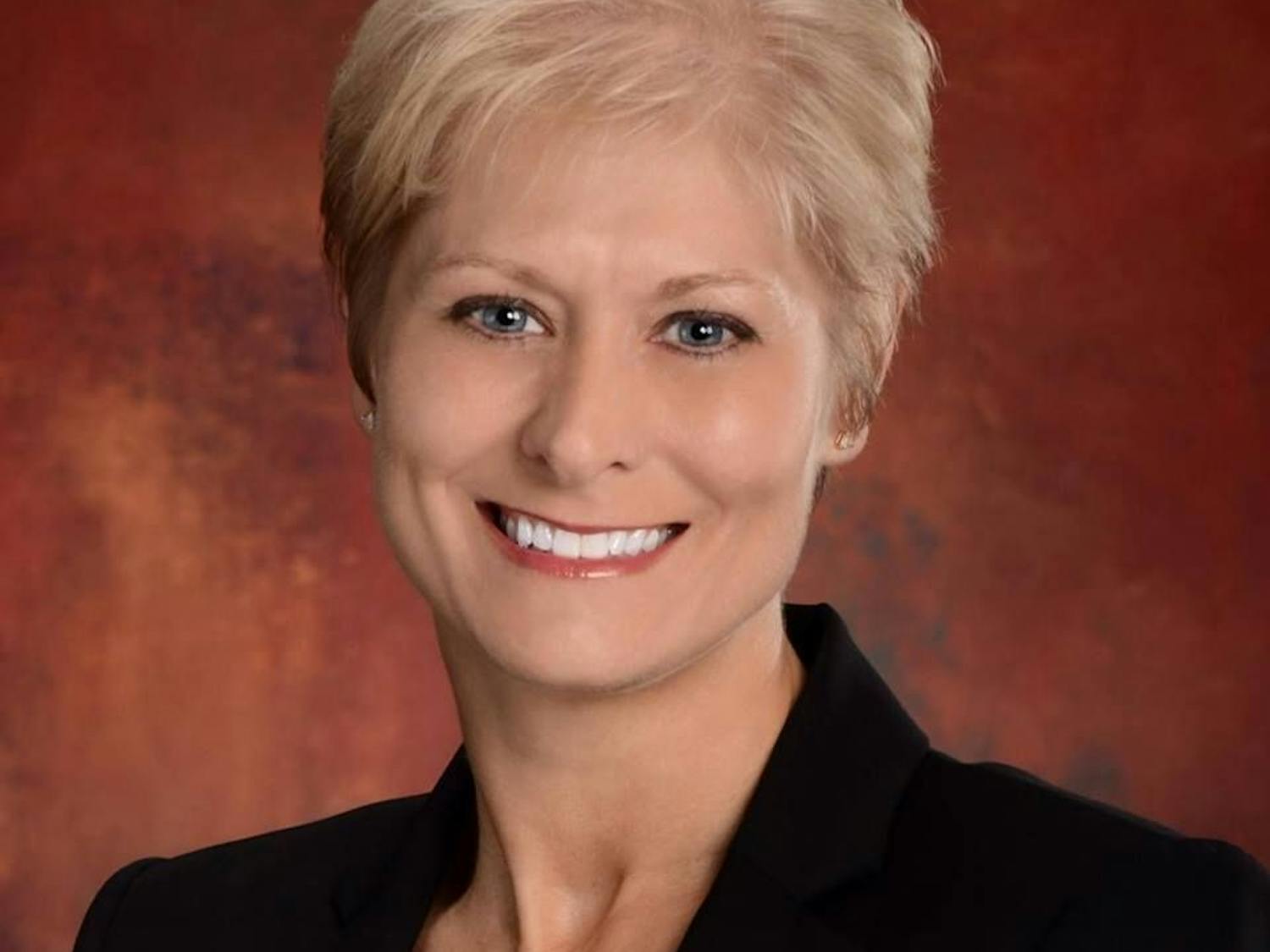
Incumbent State Rep. Debbie Phillips, D-94 challenged Yolan Dennis, Republican candidate for the district seat, on controversies ranging from climate change to abortion Tuesday evening — with both candidates taking full advantage of the hour provided to them for a debate at the Athens Public Library.Phillips and Dennis began the debate by speaking to a full audience on how they would earn Ohio University students’ votes. Phillips discussed the work she’s done to try and improve the average college student’s political and educational experience.Phillips also said she finds it frustrating when college students are turned away from the polls when trying to vote for the first time due to “bureaucratic reasons,” such as early voting hours.Dennis, however, focused more on life after college, where she said students will need to “get a job to pay for their debt.” “Jobs are hard to come by,” she said. “You are going to need someone who will stimulate that area to foster job growth.”Stepping away from student voting, Phillips and Dennis turned the debate to national topics including abortion rights, where their opinions greatly differed.Dennis said “abortion is a terrible thing,” adding that anyone who chooses to have an abortion should “think about the outcome.”However, Phillips advocated for a woman’s right to choose. She said “lawmakers are not doctors,” furthering that politicians “can’t make those calls.”Phillips said she supports medically-accurate sex education for young people, as well as providing access to contraceptives. As the health debate continued, an audience member asked Phillips and Dennis about their respective stance on the common core, which sets an educational standard for English and math statewide.Yolan said that she is not in favor of the common core program.“It takes away power and decision making of our local educators, our teachers and our parents,” she said. Phillips disagreed, saying that common core standards can sometimes be useful.“We are able to understand that they’ve learned certain things,” she said.An audience member also inquired how Phillips and Dennis might go about combating climate change, which Dennis replied she doesn’t believe in.Councilwoman Chris Knisely, D-at large, wouldn’t comment on who she might vote for this November but said she felt both candidates were well intended.“In all, both candidates are working hard to get their opinions out.”jf311013@ohio.edu


The Post

Ohio University students spend weekend in 'emotional' and 'divided' Ferguson

Students from Ohio University joined hundreds from all over the country in Ferguson, Missouri last weekend to protest racism and how police treat black people. Kelli Oliver, a senior studying commercial photography and OU Student Senate’s minority affairs commissioner, helped organized the trip to Ferguson. Students marched and protested last Saturday until after midnight, she said. “We saw a serious divide of wealth that is common in most large cities,” Oliver said. “St. Louis was large and wealthy and nice, and the suburbs around it are much lower class. It is segregated.” The continued protests come two months after Michael Brown, a 19-year-old, was shot by police in Ferguson, igniting national protests about law enforcement’s treatment of minorities and drawing attention from around the world to Missouri. The marches and acts of civil disobedience conducted last weekend were an effort to sustain protests and national attention on Ferguson, said Wesley Lowery, former editor of The Post and a national political reporter at The Washington Post. “This weekend was a culmination of the last two months and the emotion that’s been building up for the last two months,” Lowery said. “This was them trying to say, ‘This is going to have staying power. This is something we’re gonna try to transition to something bigger.’ ” Oliver said her experience in Ferguson contrasted greatly with how the media has portrayed the situation. “The accounts we heard from protesters were really shocking, with racism and how little the community is doing,” she said. In August, when the protests in Ferguson were drawing national media attention, Kevin Mattson, a professor of contemporary history at OU, heard the voice of his adopted son Jay pleading for a visit to where Brown was shot. “Ever since the Trayvon Martin slaying we have been talking to Jay about how he may be treated differently than his white friends by certain people, including law enforcement,” said Vicky Mattson, Jay’s mother and Kevin’s wife. “He is now very aware of racial risk factors.” The family traveled together to see the protests first-hand.Kevin saw this as an excellent opportunity to gain real-world experience, especially regarding race issues in the U.S.“It has brought awareness to the white community, nationwide, of issues the black community is always aware of,” Kevin said. His son Jay, a high schooler, felt he was a part of something bigger than himself when he chanted slogans and waved signs in protest. “It felt like a whole African-American movement.”The plight of young African American men is not a local problem but a national one, the Mattsons said. Initially the family was uncomfortable, but were immediately welcomed by local protesters who shouted, “Ohio’s in the house!” “We quickly realized there was a gentleman from California, and I also met a pastor from Tennessee,” Kevin said. “The national concern was evident.”@jetbramersonbj844311@ohio.edu

Powered by SNworks Solutions by The State News
All Content © 2016-2026 The Post, Athens OH