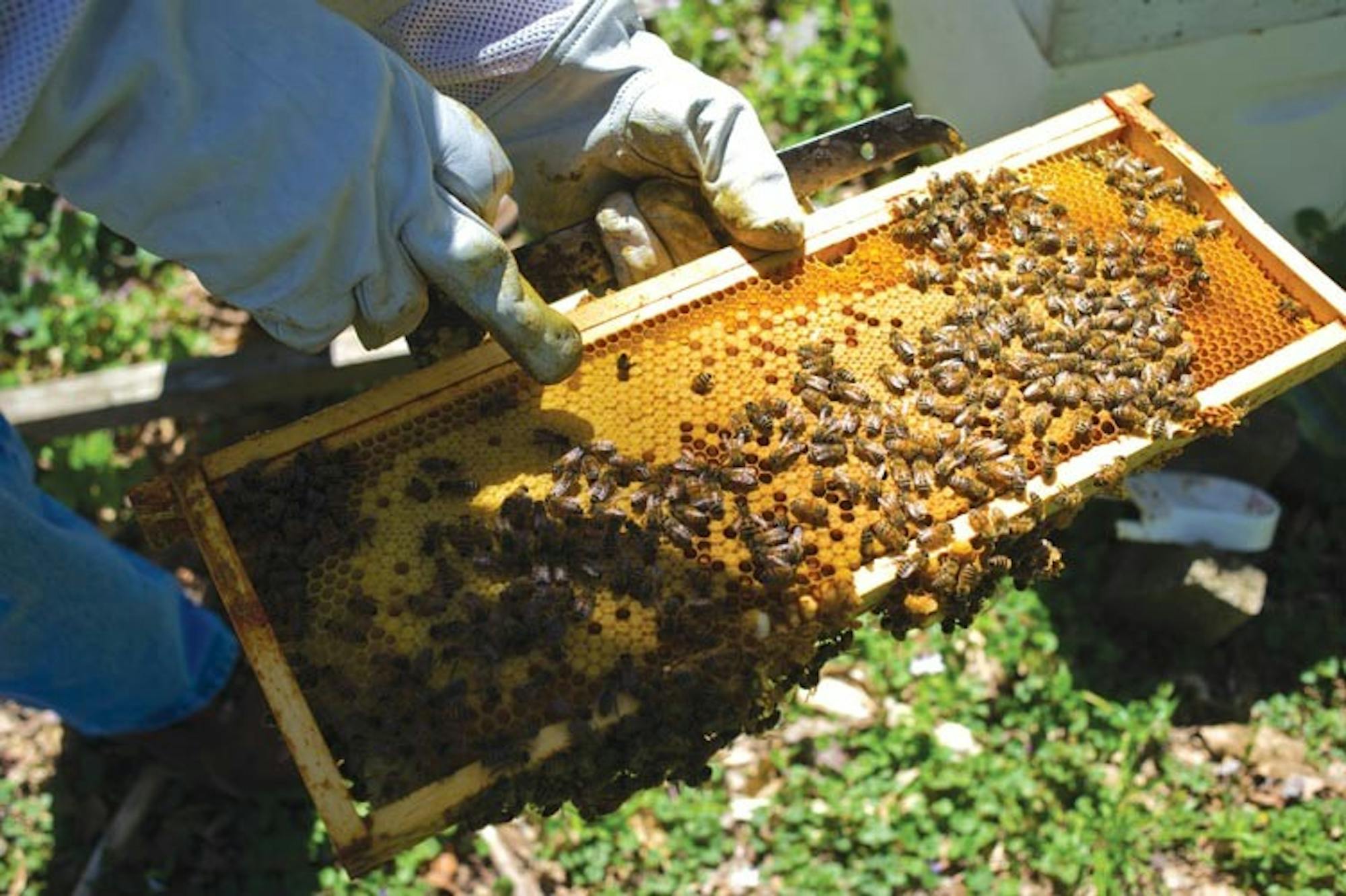
Athenians are buzzing about honeybees this spring, making money from their honey and healthy harvests.
Ohio’s Appalachian soil has long been known to reap some of the tastiest crops in the country, but nearby agriculture owes most of its success to the honeybee. This spring, the Athens County Area Beekeepers Association is kicking off the season with 65 members, 10 more than last year.
They and other non-members manage Athens County’s 120 bee yards, according to the county apiary inspector, Everett Holmes.
“This generation of beekeepers is a young bunch,” Holmes said. “They find all they can read on bees, and they want to do things right. There’s no room for error.”
Most Ohio counties have apiary inspectors to check every registered hive for American foulbrood and Varroa mites, which are common killers of Ohio hives.
In 1987, the number of honeybee hives statewide dropped from 50,000 to 14,000.
“Most beekeepers are amateur, and when something like that happens, people get discouraged,” said Eva Bear, president of the Athens Beekeepers Association. “It’s a pretty pricey hobby.”
But beekeeping is back on the rise. While the number of honeybee colonies more than doubled from 14,538 to 32,019 in 2010, the number of apiarists for the state of Ohio was reduced from four full-time positions to just one part-time slot because of budget cuts, according to the Central Ohio Beekeepers Association.
“Without honeybees, we would have no meat, no clover and no fruit,” Holmes said. “Bees do a better service for pollination than making honey. People don’t realize how important they are to mankind in general.”
Today, Ohio has 4,000 registered beekeepers with a total of 32,742 colonies.
Paul Cline retired from Athens City Schools last year to service his six Athens County bee yards full-time. Cline is one of the few queen-rearers in Ohio, selling each queen bee for $25 to $100.
“There’s a high demand for local queens because they’re adapted to the climate,” Cline said.
Cline Apiaries is one of the top honey producers in the county. With about 40 percent of his concentration on honey production, Cline barrels about 3,500 pounds per year and sells it to Athens’ Bulk Food Depot.
But the most important part of his — and every other beekeeper’s — job is to pollinate local crops.
Every third bite of food has been pollinated by a bee, according to the National Resources Defense Council, and honeybees are the biggest pollinators in the country.
“The decline in bees was extremely serious,” Bear said. “People don’t seem to fully appreciate the importance of honeybees.”
Cline said his neighbors thank him all the time for his bees, which they say nourish their farms and apple trees.
“When we imported agriculture into this country, we imported bees with it,” Bear said, “because the two just go hand in hand.”
oy311909@ohiou.edu